Building VibeRune: Architecture Decisions and Lessons Learned

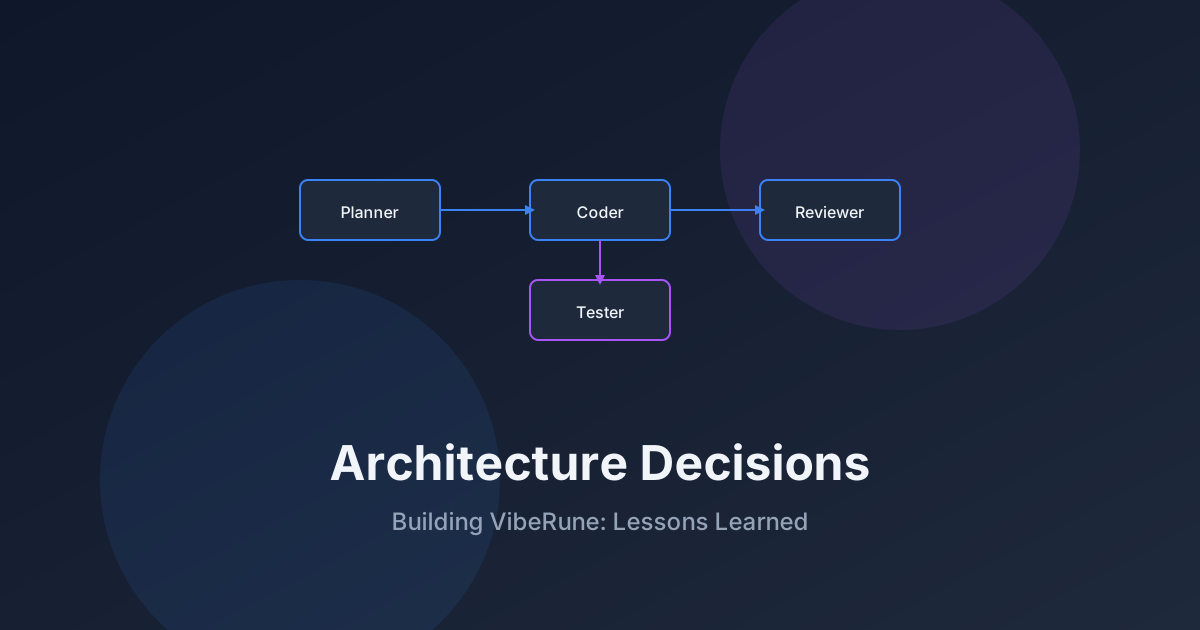
Building VibeRune involved many architectural decisions. This post shares our reasoning and lessons learned, hoping it helps others building AI-assisted development tools.
Why Claude Code as Foundation
We evaluated several AI coding assistants before choosing Claude Code as our foundation:
Strengths That Mattered
- Extended Context: Claude's large context window means less re-explanation
- Tool Use: Native support for file operations, bash commands, and custom tools
- Reasoning: Strong multi-step reasoning for complex tasks
- Safety: Built-in guardrails for responsible AI use
What We Added
Claude Code is excellent out of the box, but we saw opportunities to enhance:
- Persistent Memory: Skills and configurations that survive sessions
- Specialized Agents: Focused expertise for specific tasks
- Structured Workflows: Repeatable patterns for common tasks
The Agent Specialization Pattern
One of our key decisions was agent specialization. Instead of one general-purpose agent, we created focused specialists.
Why Specialize?
General-purpose agents face competing objectives. A single agent asked to "write code and review it" often produces mediocre results at both tasks. Specialists excel because they:
- Focus on one objective
- Apply domain-specific heuristics
- Maintain consistent quality standards
Our Core Agents
┌─────────────┐     ┌─────────────┐     ┌─────────────┐
│   Planner   │────▶│    Coder    │────▶│  Reviewer   │
└─────────────┘     └─────────────┘     └─────────────┘
       │                   │                   │
       ▼                   ▼                   ▼
  Architecture       Implementation      Quality Check
Each agent has distinct:
- System prompts: Personality and focus
- Tool access: Only what's needed
- Output format: Structured for its purpose
The SPARC Methodology
SPARC emerged from observing how effective developers work with AI:
Specification First
We noticed that vague requests produce vague results. SPARC enforces clear specifications before implementation.
## Specification
- Feature: User authentication
- Requirements: Email/password, OAuth, session management
- Constraints: Must use existing database schema
- Success criteria: All tests pass, security review approved
Pseudocode Before Code
Writing pseudocode forces algorithmic thinking without language-specific distractions.
function authenticate(credentials):
  validate credentials format
  lookup user by email
  if not found: return error
  verify password hash
  if invalid: return error
  create session token
  return success with token
Architecture Documentation
Before touching code, we document the structural approach:
- Which files to create/modify
- Integration points
- Potential breaking changes
Iterative Refinement
First drafts are rarely perfect. SPARC includes explicit refinement cycles where the reviewer agent provides feedback and the coder iterates.
Skills as Composable Knowledge
Skills are one of our simplest yet most powerful features.
The Insight
AI assistants forget everything between sessions. Skills provide persistent, composable knowledge:
# React Best Practices

## Hooks
- Use custom hooks for reusable logic
- Keep effects focused and clean

## State
- Prefer local state for UI concerns
- Use context for cross-cutting concerns
Composition Over Configuration
Skills compose naturally. A project might combine:
react.md- React patternstypescript.md- Type safety rulestesting.md- Test conventions
Each skill focuses on one domain, and they work together without conflict.
Lessons Learned
Start Simple
Our first version had complex orchestration. We simplified to:
- Clear agent definitions
- Skills as markdown files
- Commands as conventions
Simple beats complex when it works.
Embrace Markdown
We considered YAML, JSON, even custom DSLs. Markdown won because:
- Humans read and write it easily
- AI models understand it natively
- Version control shows meaningful diffs
Context is King
The #1 factor in AI output quality is context. Invest in:
- Good CLAUDE.md files
- Comprehensive skills
- Clear project documentation
Trust But Verify
AI makes mistakes. Always include:
- Code review steps
- Test requirements
- Human approval gates
What's Next
Check out our 2026 roadmap for the full development plan. We're exploring:
- Learning from feedback: Skills that improve from corrections
- Team sharing: Shared skill libraries across organizations
- IDE integration: Native VS Code and JetBrains support
Your Turn
We'd love to hear about your AI development experiences:
- What patterns have you discovered?
- What challenges remain unsolved?
- What would make VibeRune more useful?
Share your thoughts on GitHub Discussions or reach out on X/Twitter.